
Context
Faced with abnormal vibrations observed on a reinforced concrete arch bridge spanning a river, visual inspection was no longer sufficient.
To understand the real origin of the structural issues, CIDECO deployed a large-scale structural diagnosis strategy, combining massive instrumentation with modal analysis.
This mission illustrates how an instrumented approach makes it possible to go beyond visual findings to identify the root causes of pathologies.
This structure, consisting of a deck supported by two parallel arches, showed worrying signs of fatigue.
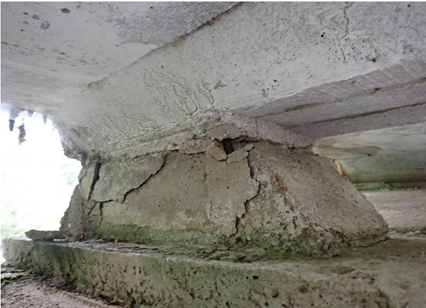
Beyond the classic visible degradation (cracking of cross-beams, advanced corrosion, failing bearings), it was the movements felt during the passage of vehicles that alerted the Client.
These vibrations, symptoms of a deeper issue, required an investigation that went beyond traditional methods.
Interventions carried out
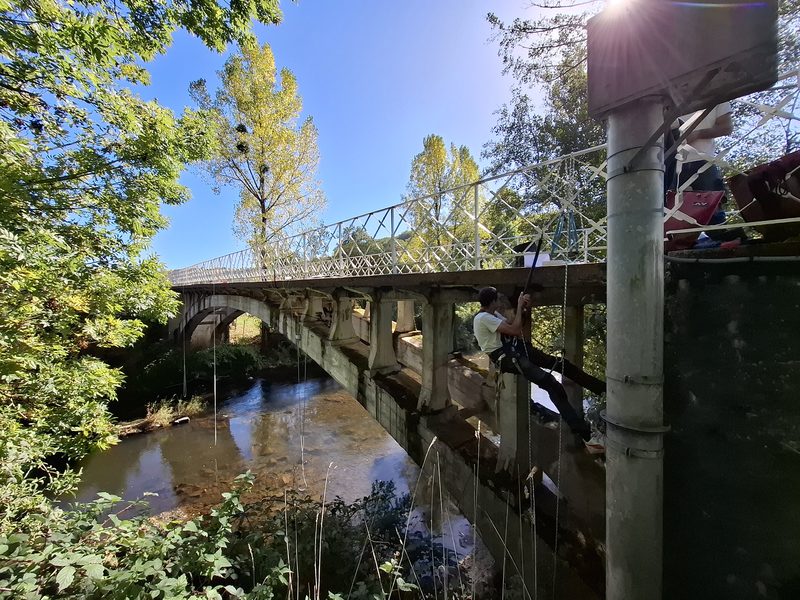
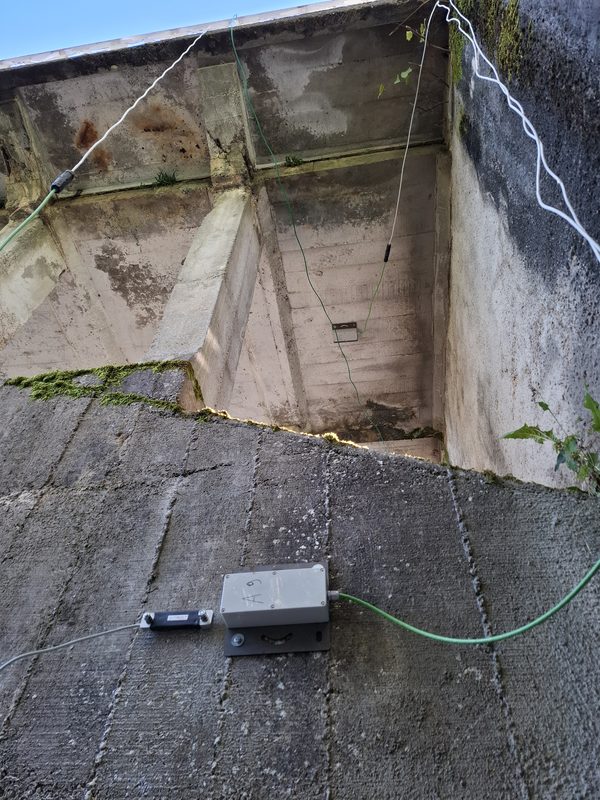
To capture the dynamic behavior of the bridge, our teams deployed a high-frequency monitoring system (1,000 measurements per second) and carried out an extensive load testing campaign.
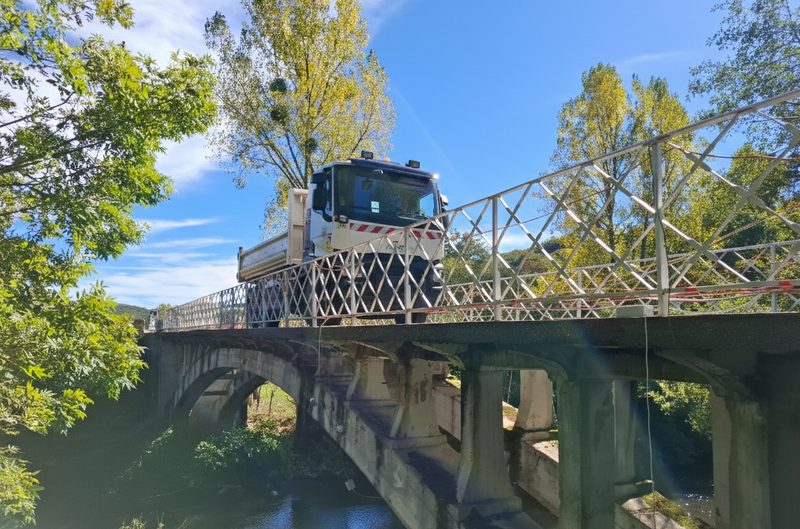
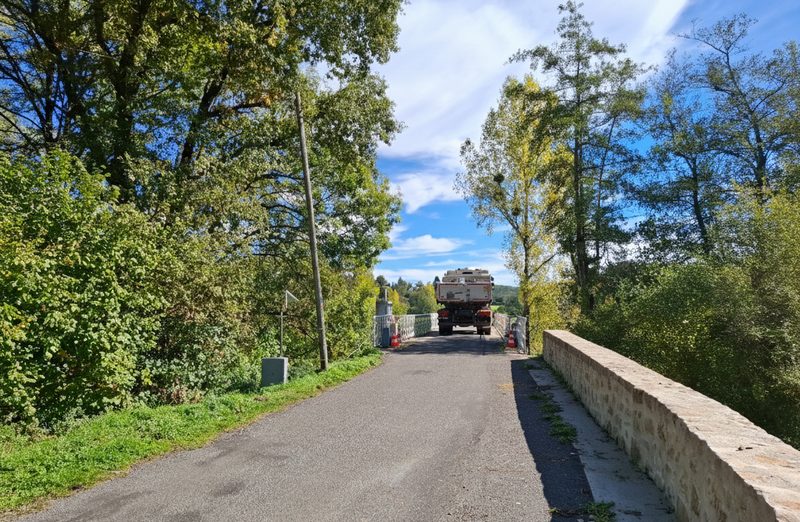
The structure was loaded using a 12-ton truck under several scenarios: runs at stabilized speeds, emergency braking to excite the structure, and eccentric traffic to test the torsional response.
This real loading is essential to go beyond theory and observe the bridge’s physical response.
A tailored instrumentation strategy
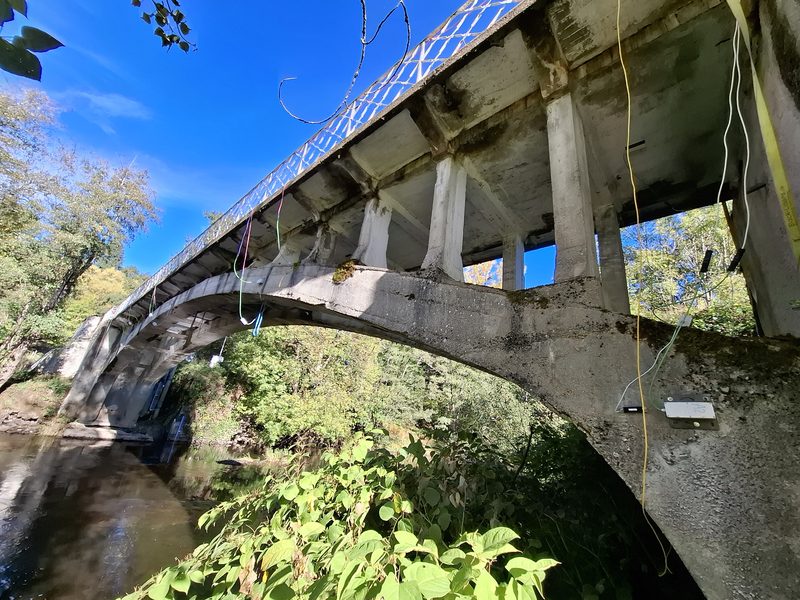
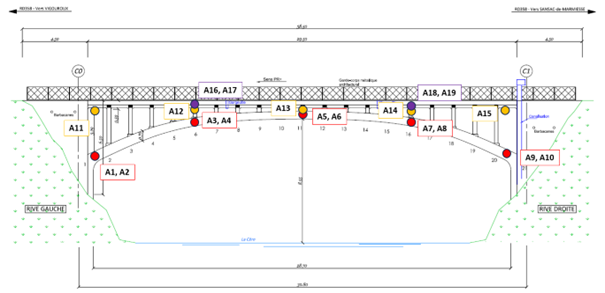
The layout plan for the 51 sensors aims to cover the entire structure in order to create an accurate representation of its behavior.
- Accelerometers on the arches and on the underside of the deck: their distribution makes it possible to reconstruct the 3D modal shapes (bending, torsion, translation).
- Accelerometers on the sidewalks, at the ends of the cantilevers: their positioning reveals the behavior of the cantilevered elements.
- Strain gauges: they measure the micro-deformations of the arches to verify that the concrete remains within its elastic range despite vibrations.
- Crack gauges: installed at critical locations, they monitor in real time whether the deck “lifts off” from its bearings during load passages.
Methods and expertise mobilised
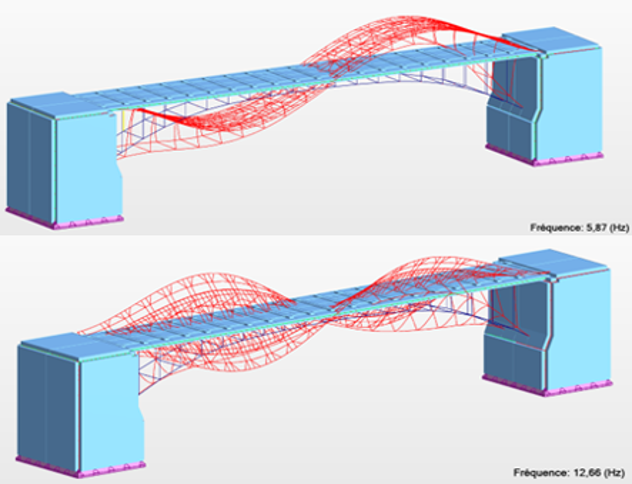
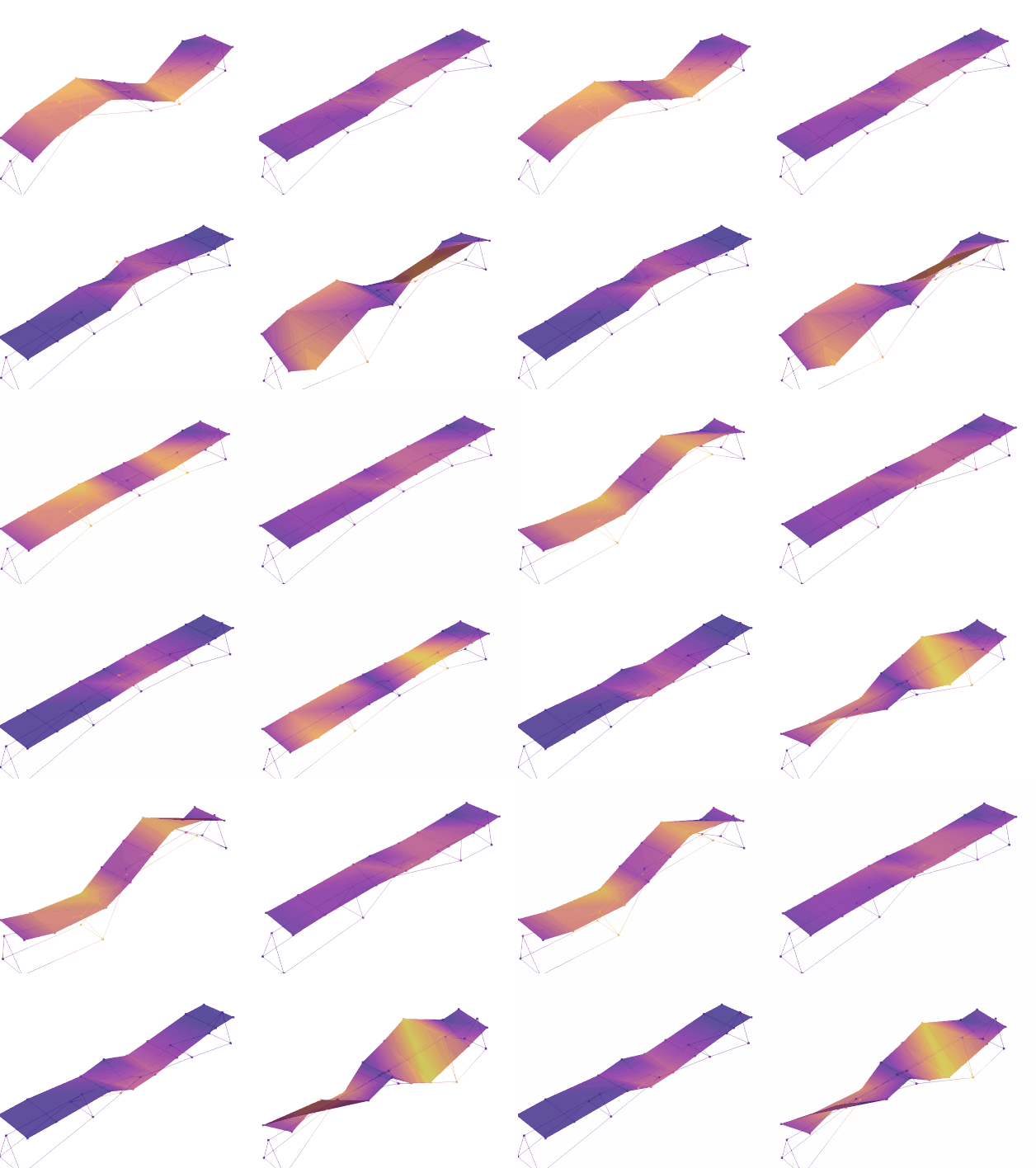
The decisive step of the diagnosis relied on Operational Modal Analysis (OMA). The mathematical processing of the recorded signals made it possible to isolate 8 natural modes of vibration specific to the structure.
Comparing these field measurements with our numerical modeling (finite elements) revealed a major discrepancy: the existence of a low-frequency vibration mode (4.64 Hz) corresponding to a pure longitudinal translation of the deck.
This movement, absent from the theoretical model of a healthy bridge, highlighted the root causes of the disorders: a failure of the deck-arch connections and a global lack of bracing.
The sensors provided objective proof of this diagnosis, with vertical accelerations reaching 0.1 m/s² and crack openings of up to 0.6 mm during eccentric vehicle passages.
Added value
This diagnosis becomes fully meaningful when defining the repair strategy.
A simple visual inspection would have led to treating only the symptoms (concrete repairs, crack stitching, replacement of bearings) without addressing the root cause of the vibrations.
A few years later, the lack of stiffness would have continued to generate excessive movements, reopening the repaired cracks and degrading the concrete once again.
Thanks to this vibration diagnosis, the asset owner now has a more comprehensive action plan.
It also includes jacketing of the pier heads to stiffen the connections, as well as the addition of longitudinal and vertical bracing.
The recommended works certainly represent a higher investment than initially expected.
However, they guarantee the durability of the structure over several decades, thereby optimizing the overall maintenance cost.